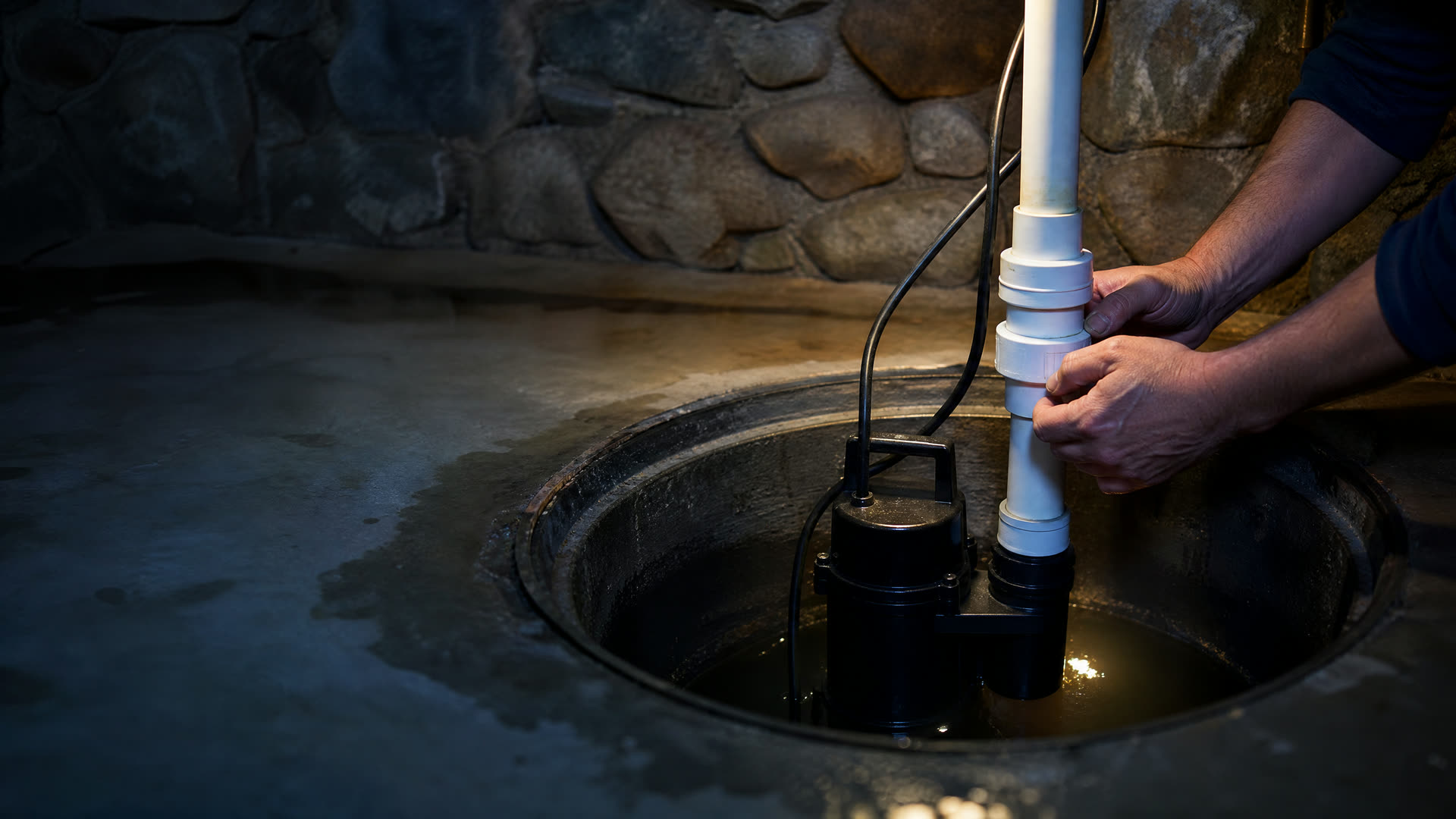
For a new installation, the plumber picks a pit location where water collects, breaks the floor, sets a lined basin, and runs a discharge line with a check valve through the wall. On a septic lot, they should route the outlet to a spot that drains away from both the foundation and the leach field, and away from a private well if you have one.
Older cellars, including the roughly one in five local homes built before 1940, may have stone or block foundations that let water in at many points. In those houses the plumber may suggest a perimeter drain feeding the pit, which is a bigger job than a single pump.
Ask whether the work needs a permit from the Building Department and whether a dedicated circuit is needed, which would bring in an electrician and the town's wiring inspector. A battery backup or water-powered backup is worth discussing, since long storms are the times power is likeliest to go out.