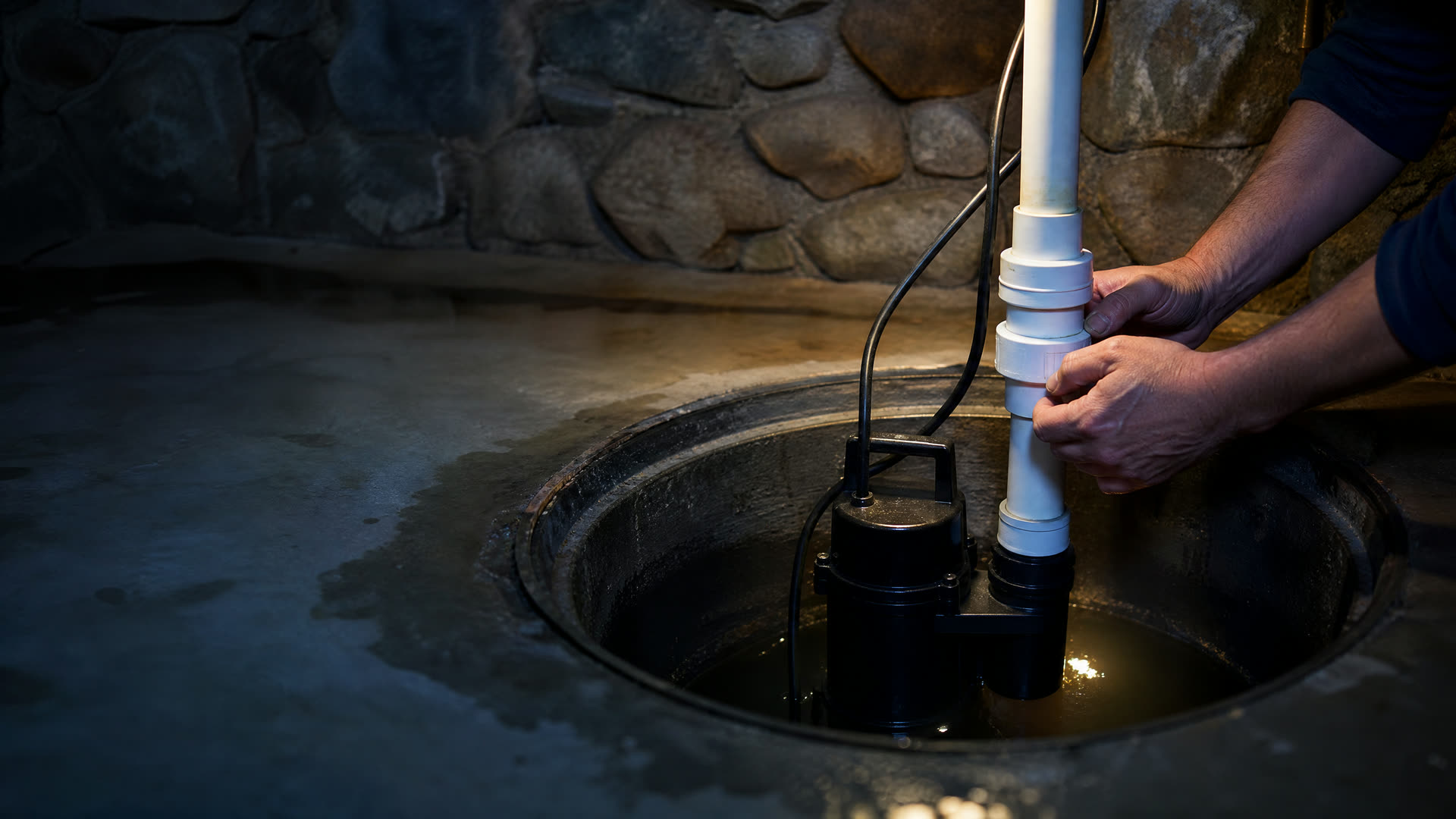
For a replacement, the plumber will look at the pit, the pump size, the check valve, and where the discharge goes. A new installation means cutting into the floor, digging a pit, adding a liner, and running a discharge pipe outside, ideally to a spot where the water drains away from the foundation and not toward a septic leach field or a neighbor's yard.
Many owners add a battery backup or a second pump in the same pit, especially in low basements near the river or wetlands. Ask the plumber to explain how long a backup can run and how you'll know if it's working. A water-powered backup is another option in homes on town water, and the plumber can tell you whether it fits your setup.
If the work includes new plumbing connections or electrical circuits, permits may apply. Bridgewater's Building Department enforces both the plumbing and the electrical wiring codes, and it expects the permit card to be issued before work starts, so ask the plumber which permits your job needs.