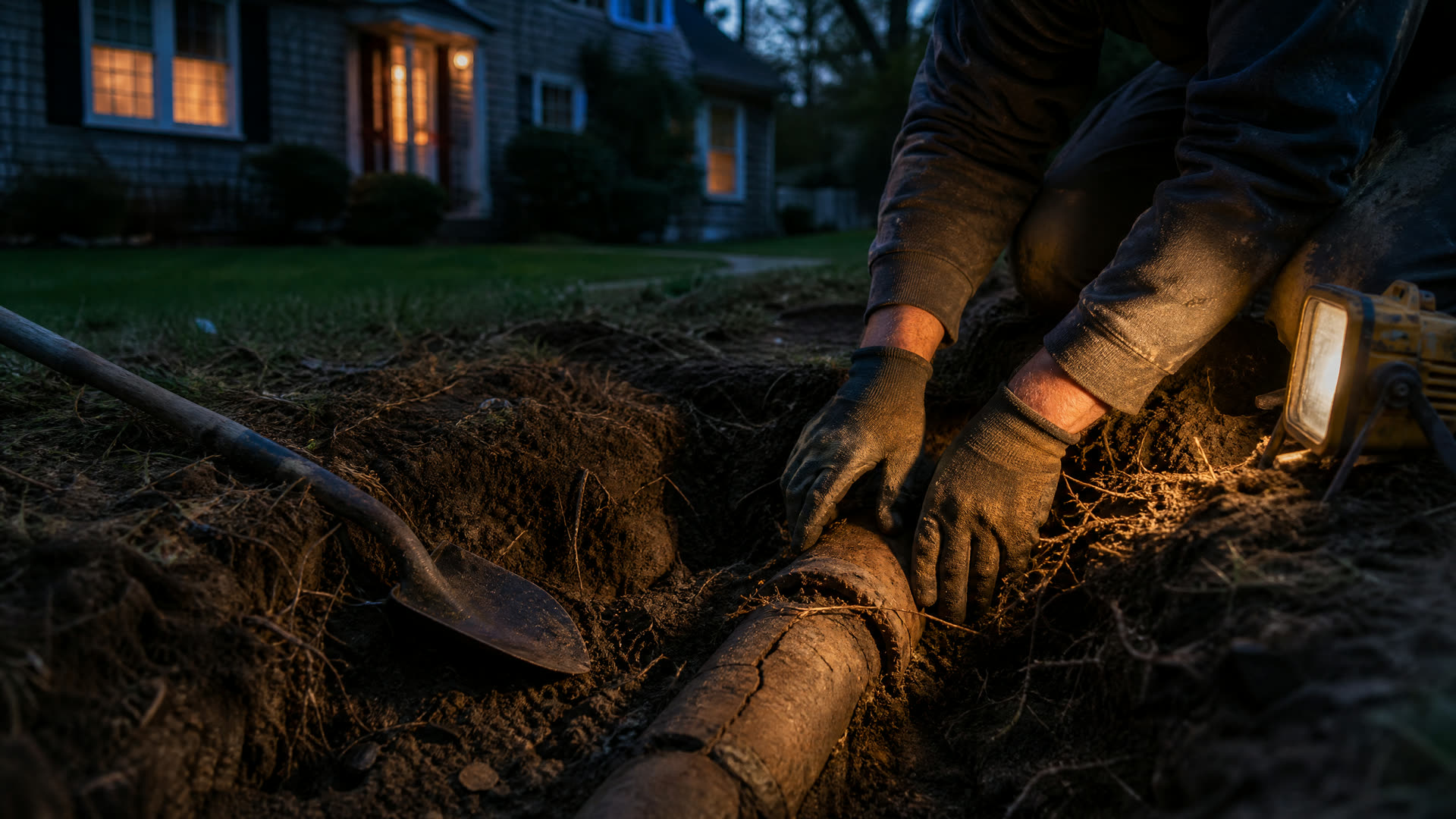
Most repairs start with a camera run from a basement cleanout toward the tank or the street. The video shows roots, cracks, offset joints, and low spots, and a locator can mark the pipe's path and depth on the lawn. On a septic property the inspection often ends at the tank inlet, which tells the plumber whether the failure is in the pipe or in the system beyond it.
Replacing a section of building sewer is plumbing work under a permit from the Building Department's plumbing and gas inspector, filed through the town's online portal. Anything that touches the tank, distribution box, or leach field goes through the Board of Health and is usually done by a septic installer, so a full repair can involve two permits and two trades.
With the median local home built around 1977, many building sewers are likely plastic, but houses from before 1940, about one in five here, may still have cast iron or clay. Those older materials are the ones roots and settling tend to break.