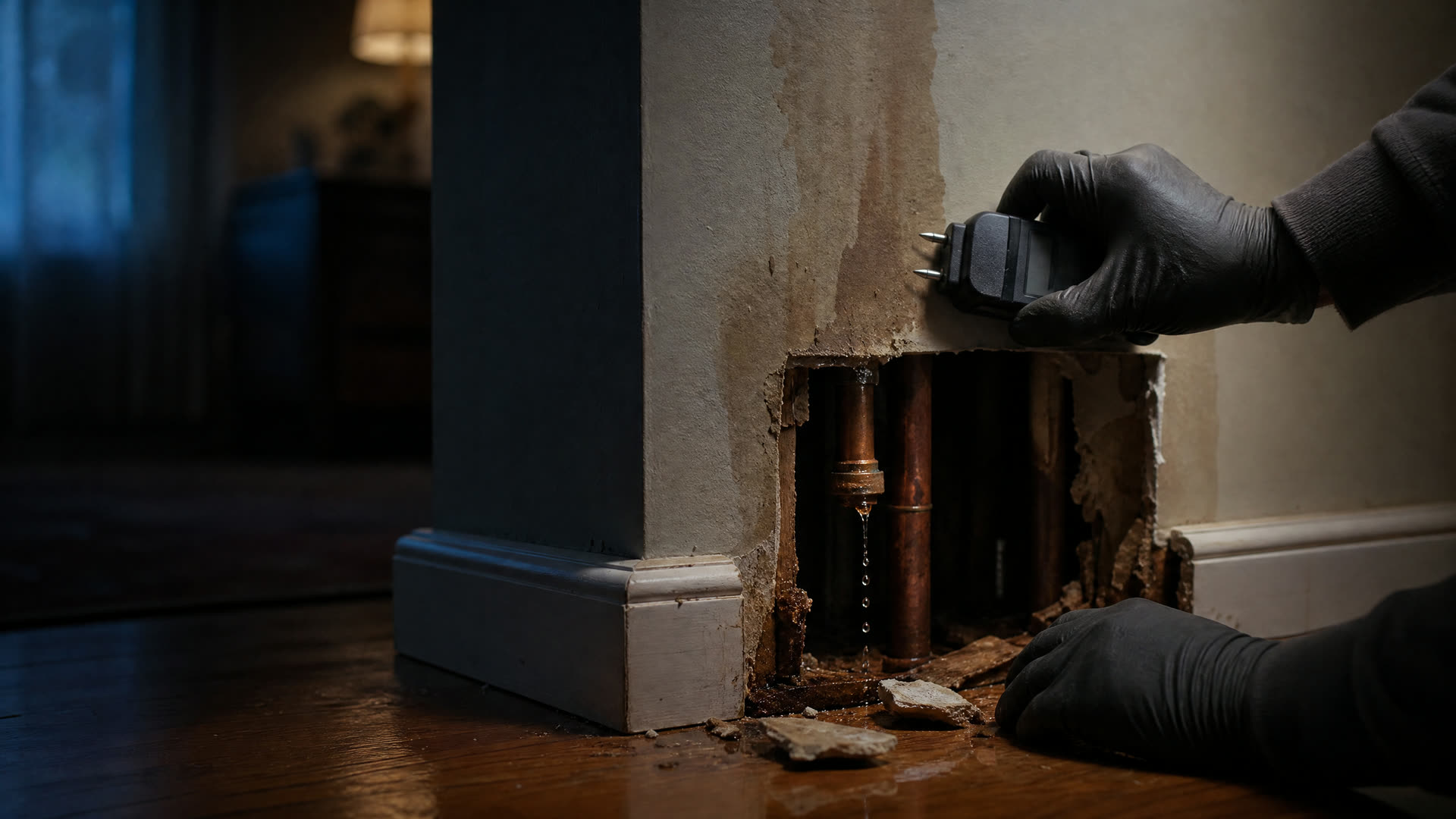
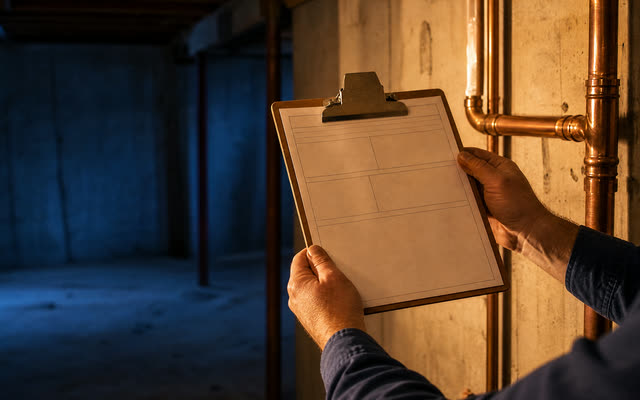
A plumber usually starts by isolating parts of the system, closing valves to see whether the meter stops, then pressure-testing individual branches. Moisture meters, thermal imaging, and acoustic gear narrow the search so only a small patch of wall or ceiling has to come open.
Once the leak is found, the plumber will look at the pipe around it. In houses from the 1950s, one pinhole in galvanized or thin copper often means others are coming, and repiping a section may beat a patch. Repairs and repiping go through the Building Division, whose plumbing inspector works by appointment on Monday, Wednesday, and Thursday afternoons.
If the leak is on the service line between the meter and the street, ask the plumber to check with the Water Division before digging, particularly if the town's map lists lead, galvanized, or unknown material at your address.